
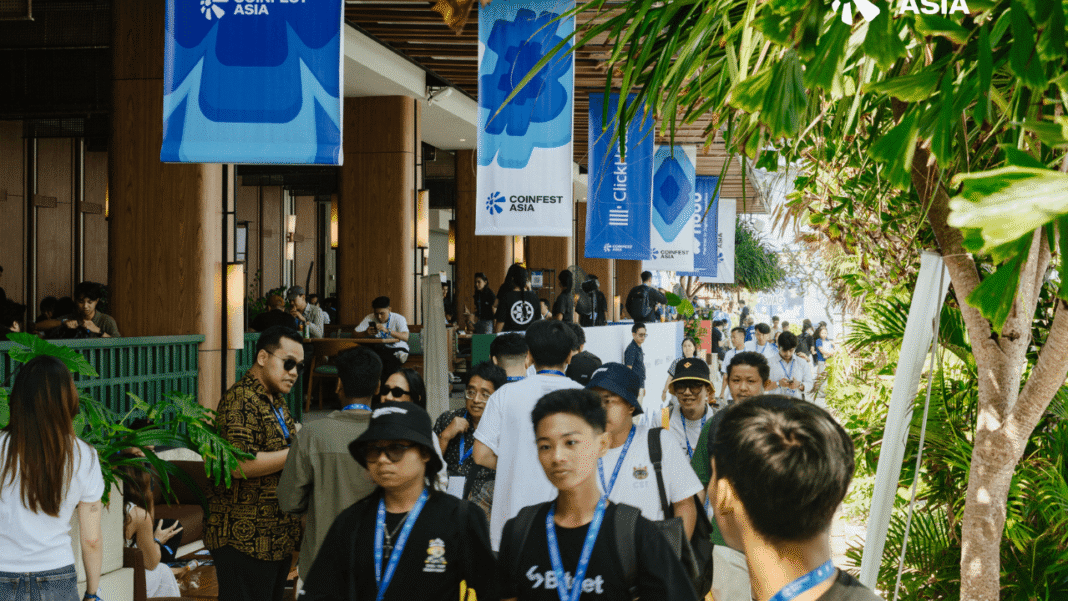

Bali — Coinfest Asia, The World’s Crypto Festival, took place on August 20–21, 2026, across five beach clubs in the Melasti Beach area of Bali. The festival brought together policy discussions, industry issues, business networking, and community interaction in a festival format, attracting 10,000 participants from 90 countries.
Held since 2019, Coinfest Asia has evolved from a crypto community gathering into one of Asia’s key meeting points for the digital asset industry.
For Steven Suhadi, Founder of Indonesia Crypto Network (ICN), the organizer of Coinfest Asia, this growth is not only about scaling up, but also about creating a different experience for participants across the digital asset ecosystem.
“The industry already has many conferences. But Coinfest takes a different approach: it is a place where trust can truly be built between regulators and industry players, investors and founders, as well as global companies and local ecosystems. The festival format is not simply about aesthetics, but a deliberate design to craft deeper insights and a platform where online communities become real world relationships,” Steven said.
Bringing Together Indonesian and Global Industry Leaders
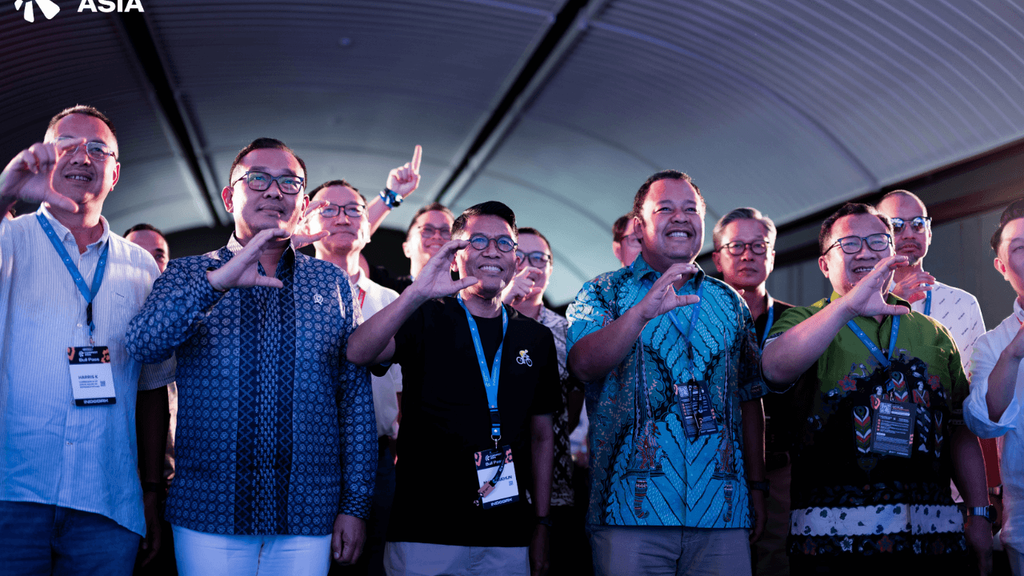
Representatives from Indonesia’s Ministry of Investment, House of Representatives (DPR), and Financial Services Authority (OJK) at Coinfest Asia 2026. Photo: Coinfest Asia.
A number of prominent Indonesian figures attended the event, including Mukhamad Misbakhun, Chairman of Commission XI of the Indonesian House of Representatives (DPR RI); Todotua Pasaribu, Vice Minister of Investment and Downstreaming and Deputy Head of BKPM; Adi Budiarso, Chief Executive of the Financial Technology Innovation, Digital Financial Assets and Crypto Assets Supervision at the Financial Services Authority (OJK); Pantro Pander Silitonga, Executive Director of the National Economic Council (DEN); Kai Hamza Pang, CEO of ICEx Group; William Sutanto, Co-Founder and CEO of INDODAX; and many more.
Global industry leaders also attended in person, including Alexander Svanevik, CEO of Nansen; Vugar Usi, CEO of MEXC Ventures; Angela Ang, Managing Director, APAC and President of Singapore at BitGo; and Chengyi Ong, Director of Policy and Regulatory Strategy, APAC at Circle. Yi He, Co-Founder and Co-CEO of Binance, and Charles Hoskinson, Founder and CEO of Input Output, also joined virtually.
From Stablecoins to Indonesia’s International Financial Center Ambition
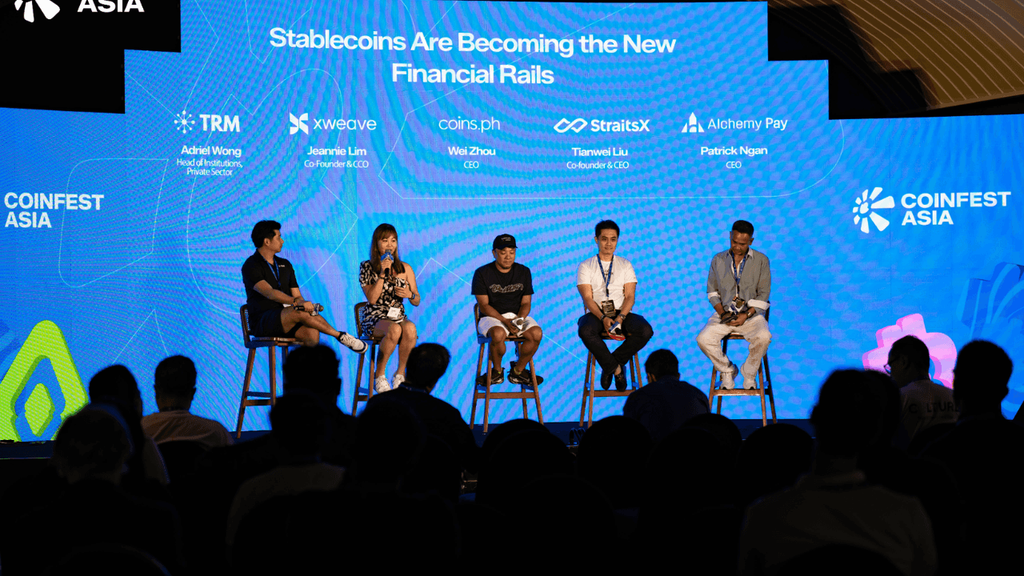
Industry leaders and experts discuss the future of stablecoins during a session at Coinfest Asia 2026. Photo: Coinfest Asia.
Regulation, stablecoins, asset tokenization, and institutional adoption were among the key topics discussed at Coinfest Asia 2026. The discussions reflected the increasingly close relationship between digital assets and the broader financial sector.
In Indonesia, these developments also intersect with the government’s vision of building a financial center connected to global markets. Pantro Pander Silitonga, Executive Director of DEN, presented the vision for the Indonesia International Financial Center (IIFC), which is projected to have the potential to attract approximately Rp300–500 trillion (US$16.9–28.1 billion) in investment.
“Financial services will be at the core, from banking and insurance to private equity. We also want to bring in new asset classes, including crypto, as part of this development. Let’s work together to develop this market,” Pantro said.
From a regulatory perspective, Mukhamad Misbakhun, Chairman of Commission XI of the DPR RI, emphasized the importance of preserving room for innovation. He also sees potential for tokenization to be applied to various assets in Indonesia, including mining, property, and infrastructure.
“Supervision must not hinder innovation. We must not allow regulation to kill innovation,” Misbakhun said.
Meanwhile, Yi He, Co-Founder and Co-CEO of Binance, said the industry’s challenge is shifting from proving that blockchain works to demonstrating how the technology can deliver tangible benefits to society at scale.
“Our challenge today is no longer proving that blockchain can work, but showing that the technology can truly benefit society at scale,” Yi He said.
That view was echoed by Charles Hoskinson, Founder and CEO of Input Output, who sees Web3 and traditional financial systems moving closer together toward 2030.
“The question is, how do we bring these two worlds together?” Hoskinson said.
According to Hoskinson, the development of stablecoins, real-world assets, regulation, privacy, and AI will be part of the next phase of the digital asset industry. “The revolution is far from over. In fact, it is only just beginning,” he said.
Expanding Business and Industry Connections
Coinfest Asia 2026 featured the Institutional Summit, a curated, closed-door forum supported by ICEx, CACI, and ICC, representing digital asset trading, clearing, and custody infrastructure.
The summit brought together regulators, financial institutions, technology companies, and digital asset industry players to discuss strategic issues and explore opportunities for collaboration. Representatives from the Financial Services Authority (OJK), Bank Indonesia (BI), Danantara Indonesia, the Indonesia Stock Exchange, Bappenas, and the Indonesian Chamber of Commerce and Industry (KADIN) joined industry players including BRI, Superbank, Xendit, Tether, Coinbase, BitGo, and many more.
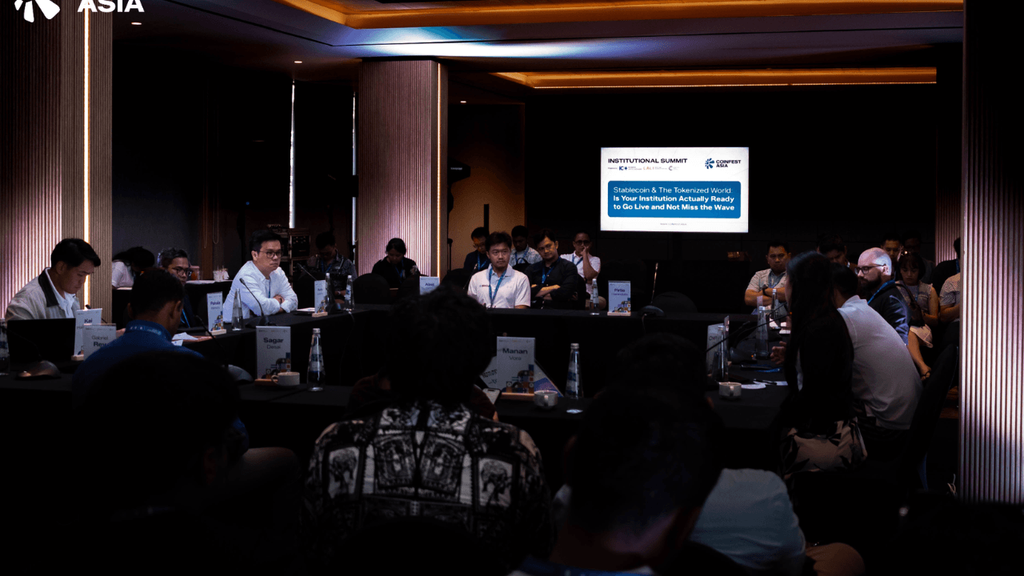
Regulators, financial institutions, and digital asset industry players at the Institutional Summit during Coinfest Asia 2026. Photo: Coinfest Asia.
Discussions covered asset tokenization and the use of stablecoins for institutional needs, including “Tokenization: Which Assets Will Actually Scale in Asia?” and “Stablecoins in Asia: From Crypto Settlement to Real Corporate Payments.”
Chairman of Commission XI of the DPR RI Mukhamad Misbakhun said bringing different groups together was one of Coinfest Asia’s strengths.
“At Coinfest Asia, industry players, regulators, and investors meet in the same space. In my view, a format like this is not only interesting, but should also continue to be strengthened and expanded in the future,” he said.
The format created opportunities for regulators and industry players to exchange perspectives, understand cross-sector needs, and build relationships that can continue beyond the event.
From Product Development to Trading Competition
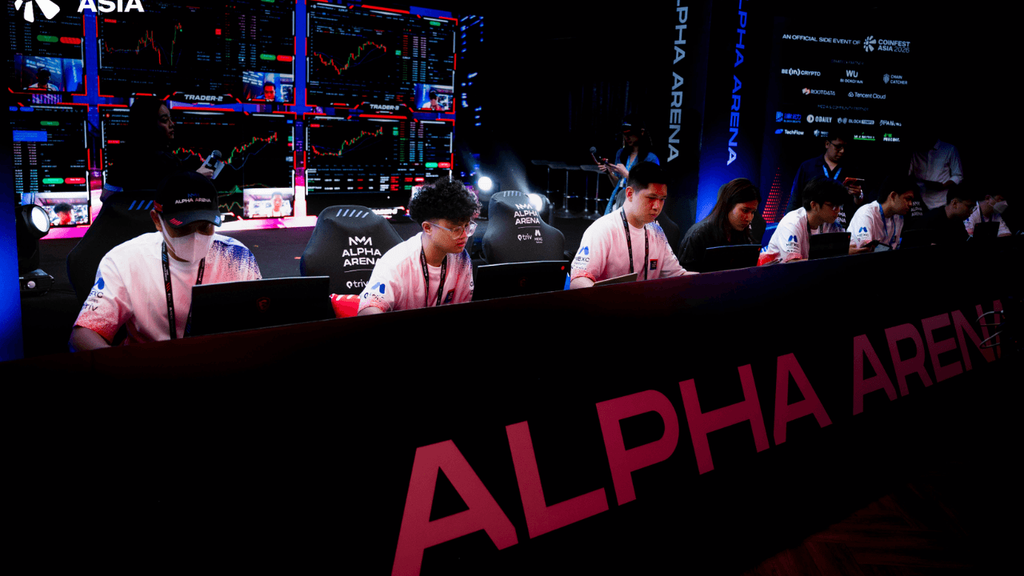
The Alpha Arena Trading Competition Grand Final, powered by MEXC Ventures, at Coinfest Asia 2026. Photo: Coinfest Asia.
Beyond policy and institutional discussions, Coinfest Asia also served as the final stage for several programs that had been running ahead of the event.
Protocol Camp Cohort 9, a builder program by ShardLab developed in collaboration with the Ministry of Creative Economy (EKRAF), concluded its program with a Final Demo at Coinfest Asia. Six Indonesian talents presented the Web3 and AI products they had developed.
On the market side, the Alpha Arena Grand Final brought together traders from across Asia for a live trading competition with a total prize pool of US$100,000, supported by MEXC Ventures.
Together, the two programs highlighted Coinfest Asia’s broader scope, extending beyond policy and institutional discussions to include product development, talent, and market activities.
Coinfest Asia 2026 was supported by companies across the digital asset, technology, and financial sectors, including ICEx Group (ICEx, CACI, ICC), MEXC Ventures, INDODAX, CFX, and many more.
About Coinfest Asia
Coinfest Asia has been held since 2019 and is organized by Coinvestasi, part of Indonesia Crypto Network (ICN). What began as a small crypto community gathering in Jakarta has grown into the world’s crypto festival, providing a space for communities and industry players to connect, collaborate, and contribute to the development of digital assets across Asia and beyond.