
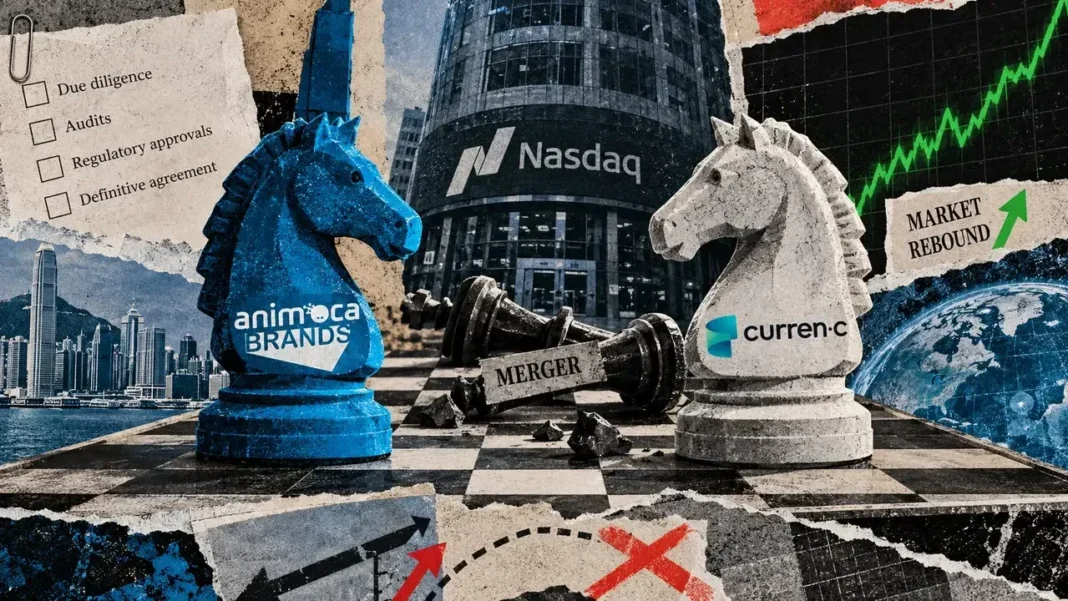

Digital asset venture Animoca Brands has halted merger negotiations with Nasdaq-listed Currenc Group after the two entities missed deadlines to finalize binding terms.
The firms announced on Sept. 22 that they had mutually decided to halt discussions. Following a review of anticipated closing schedules and shifting market dynamics, they determined that the extended timeframe required to finalize the deal no longer matched their short- and medium-term objectives.
In a regulatory filing, Currenc noted that its exclusivity window with Animoca lapsed without a final contract. Pausing the talks affords the business increased latitude to pursue operational and growth funding, all while keeping the door open to resume discussions down the road.
Initially detailed in a non-binding term sheet on Nov. 2, 2025, the proposed reverse merger would have served as a pathway for Animoca to re-enter public markets. Under the plan, Animoca shareholders were projected to control approximately 95% of the merged entity, with current Currenc stockholders holding the remaining 5%.
The deal was still contingent upon thorough due diligence, final paperwork, and various corporate, legal, and regulatory clearances. Furthermore, the preliminary distribution of ownership could have shifted prior to completion.
Expired timetable frees Currenc to pursue financing
Yat Siu, co-founder and Executive Chairman of Animoca, stated that maintaining adaptability remained a core focus as the enterprise pushes toward a public offering.
“While we hold our proposed merger with Currenc Group in high regard, our corporate agility must take precedence,” Siu remarked, pointing out that Animoca is actively progressing with audits and other regulatory necessities essential for a major public exchange debut.
Both businesses were still moving forward with the arrangement as late as May, at which point they prolonged their exclusivity agreement until June 30 with an anticipated third-quarter closing target. That extra time was intended to facilitate final paperwork and due diligence, yet a binding contract was never executed.
By September, the exclusivity window had run out with essential conditions still unsettled. Animoca pointed to changing market trends and elongated schedules, whereas Currenc emphasized that putting talks on hold allows it more freedom to secure capital for day-to-day operations and expansion.
Consequently, Currenc can now seek out funding sources independently of the merger timeline, while retaining the freedom to revisit talks later on.
Meanwhile, Animoca is pressing ahead independently with its broader strategy to list publicly. The firm affirmed its dedication to securing a listing on a prominent exchange and is actively preparing its audited financials for fiscal year 2024 as part of a broader compliance initiative.
While the Currenc agreement provided a straightforward gateway to a Nasdaq-listed entity for Animoca, no alternative schedule, exchange, or replacement partnership has been made public since the breakdown.
Both participants have kept the door open for potentially reviving discussions if circumstances become more favorable. Even so, Currenc warned that there is no guarantee negotiations will pick back up or successfully lead to a completed agreement.
Frequently Asked Questions
Why did Animoca Brands and Currenc Group suspend their merger?
The companies mutually agreed to pause talks on Sept. 22 after missing deadlines for definitive terms, concluding that changing market conditions and extended closing timelines no longer aligned with their strategic priorities.
What was the proposed ownership structure of the merged company?
Under the non-binding term sheet, Animoca shareholders were expected to own about 95% of the combined entity, while existing Currenc investors would have held roughly 5%.
What does the suspension mean for Currenc Group?
The expired exclusivity period frees Currenc to seek financing for its operations and growth without waiting for the merger process, while preserving the option to restart talks later.
Is Animoca still planning to go public?
Yes, Animoca is continuing separately with its broader plan to relist on a major exchange and is preparing its FY2024 audited financial statements as part of a wider compliance push.